Additional Information
Challenges of the 7 Days Annapurna Base Camp Trek
Trek Distance
The 7 Days Annapurna Base Camp Trek is a compact and rewarding Himalayan adventure that requires several consecutive days of walking through varied mountain terrain. The route includes steep ascents and descents, stone steps, forest trails, suspension bridges and uneven mountain paths.
Because this itinerary reaches Annapurna Base Camp within a limited timeframe, trekkers should be prepared for relatively long walking days. Maintaining a steady pace, staying hydrated and taking appropriate rest are important for completing the trek comfortably.
Physical Fitness
A good level of physical fitness is recommended for the Annapurna Base Camp Trek. You will walk for several hours on most trekking days, often on steep and uneven trails.
Regular walking, hiking, stair climbing and cardiovascular exercise before the trek can help you prepare for the physical demands of the journey.
No technical climbing experience is required, but trekkers should be comfortable with continuous uphill and downhill walking.
Altitude
The highest point of the trek is Annapurna Base Camp at 4,130 metres. As you gain altitude, the air becomes thinner and your body needs time to adjust to the changing environment.
Some trekkers may experience symptoms related to altitude, such as headache, tiredness, dizziness, nausea or shortness of breath.
Our trekking team monitors trekkers throughout the journey. Walking at a manageable pace, staying hydrated, eating properly and informing your guide about any unusual symptoms are important parts of safe trekking.
Challenging Terrain
The Annapurna Base Camp trail includes a mixture of stone staircases, forest paths, rocky sections, suspension bridges and steep uphill and downhill sections.
The trail can become slippery during rain or snowfall, particularly in forested and higher sections. Proper trekking shoes with good grip and trekking poles can be useful.
Remote Mountain Environment
As the trek progresses deeper into the Annapurna Sanctuary, access to modern facilities becomes more limited.
Medical facilities and transportation options are not as readily available as they are in cities. Trekkers should therefore carry suitable personal medication and have travel insurance that includes trekking and emergency evacuation coverage.
Teahouse Accommodation
Accommodation during the trek is generally provided in local teahouses and lodges.
Rooms are usually simple, with twin beds and basic furnishings. Facilities become more basic as you travel farther into the mountains. Shared bathrooms are common, and hot showers may be available at an additional cost depending on the location.
The teahouse experience is an important part of trekking in Nepal and gives you the opportunity to interact with local communities and fellow trekkers.
Limited Connectivity
Mobile network and internet connectivity can vary along the Annapurna Base Camp route.
Lower sections generally have better connectivity, while communication may become limited or unreliable at higher elevations. Wi-Fi may be available at some teahouses for an additional charge, but trekkers should not depend on a continuous internet connection.
This also provides an opportunity to disconnect from everyday life and enjoy the mountains.
Weather
Mountain weather can change quickly. Conditions can vary considerably between the lower valleys and Annapurna Base Camp.
During the colder months, temperatures can drop significantly at night, while rain and snowfall can affect higher sections of the trail.
Trekkers should be prepared for changing weather by carrying appropriate layers, a waterproof jacket, warm clothing, gloves, a hat and suitable trekking footwear.
High Mountain Rescue
Although the Annapurna Base Camp Trek follows a well-established trekking route, the higher sections are located in a remote mountain environment.
In the event of a serious emergency, evacuation may be required. Weather conditions, terrain and location can affect rescue operations.
Travel insurance covering trekking at the required altitude and emergency helicopter evacuation is strongly recommended.
Best Time to Do the Annapurna Base Camp Trek in Nepal
Spring
March to May is one of the best periods for the Annapurna Base Camp Trek.
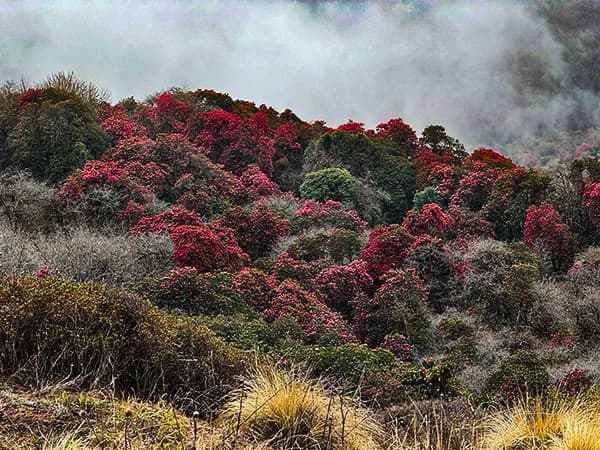
The weather is generally favorable for trekking, with good mountain visibility and comfortable conditions in the lower and middle sections of the route. Spring is also famous for blooming rhododendron forests, adding beautiful colors to the trekking trail.
The combination of clear mountain views, pleasant temperatures and blooming forests makes spring a popular season for the Annapurna region.
Autumn
September to November is another excellent season for the Annapurna Base Camp Trek.
After the monsoon, the atmosphere is generally clearer, the mountain views are spectacular and trekking conditions are favorable.
October and November are particularly popular because of the stable weather, clear skies and excellent Himalayan visibility.
Winter
Winter trekking is possible, but temperatures can become very cold at higher elevations and snowfall may affect the trail around Annapurna Base Camp.
Trekkers planning a winter journey should be properly equipped with warm clothing and be prepared for changing trail conditions.
Monsoon
The monsoon season generally brings frequent rainfall, clouds and wet or slippery trails.
Rain can also affect visibility and make some sections of the trail more challenging. However, the lower Annapurna region remains accessible in many periods, and experienced trekkers may still choose to travel during this season.
Accommodation and Meals
Rooms and Washrooms
Accommodation during the 7 Days Annapurna Base Camp Trek is provided in local teahouses and lodges.
Most rooms have twin beds with basic bedding and furnishings. At higher elevations, accommodation becomes simpler due to the remote mountain environment.
Bathrooms may be shared, and facilities can range from Western-style toilets to squat toilets depending on the lodge.
Hot showers may be available at selected teahouses for an additional charge.
Hot Shower
Hot showers are available at many teahouses along the lower and middle sections of the Annapurna trail, usually for an additional fee.
As you reach higher and more remote areas, hot water becomes more limited and may be provided through gas, solar heating or bucket showers.
At Annapurna Base Camp and other high-altitude locations, trekkers should be prepared for more basic facilities.
Charging
Electricity and charging facilities are available at many teahouses, although availability can vary depending on the location and weather conditions.
At higher elevations, charging may cost an additional fee and electricity can sometimes be limited.
We recommend carrying a power bank and conserving your phone and camera battery during the trek.
Wi-Fi
Wi-Fi may be available at some teahouses along the Annapurna Base Camp route, generally for an additional charge.
Connectivity can become slower and less reliable as you move higher into the Annapurna Sanctuary.
Trekkers should consider internet access a convenience rather than something that will always be available.
Breakfast
Breakfast is served at the teahouses and normally includes a selection of simple, nutritious meals.
Depending on the location, options may include porridge, eggs, bread, toast, pancakes, noodles, potatoes and hot beverages such as tea or coffee.
Breakfast provides the energy needed for the day's trek.
Lunch and Dinner
Lunch and dinner are generally served at local teahouses along the trekking route.
Common options include Dal Bhat, noodles, rice, pasta, soup, potatoes, vegetables, eggs and other simple meals.
Dal Bhat is a particularly popular trekking meal because it provides a filling combination of rice, lentils and vegetables.
Food choices may become more limited at higher elevations because supplies have to be transported into the mountains.
Vegetarian meals are widely available.
Drinking Water and Beverages
Safe drinking water is available at various points along the trekking route.
Trekkers can purchase bottled, filtered or treated water from teahouses and local stations. Water purification tablets or a suitable water filtration system can also be useful.
Tea, coffee, hot lemon, soft drinks and other beverages are available at many teahouses. Prices generally increase with altitude because transportation becomes more difficult.
We recommend carrying a reusable water bottle to reduce plastic waste and support responsible trekking practices.