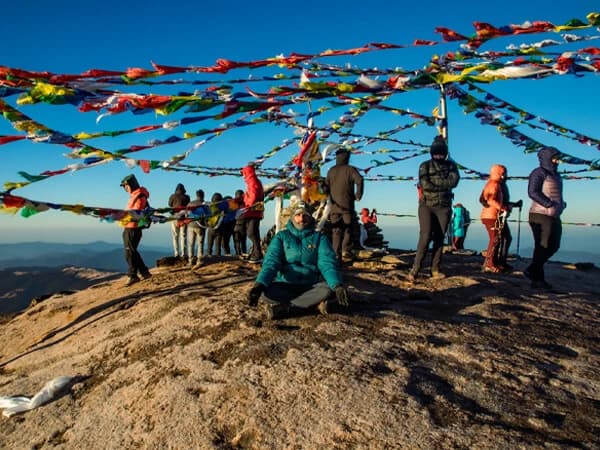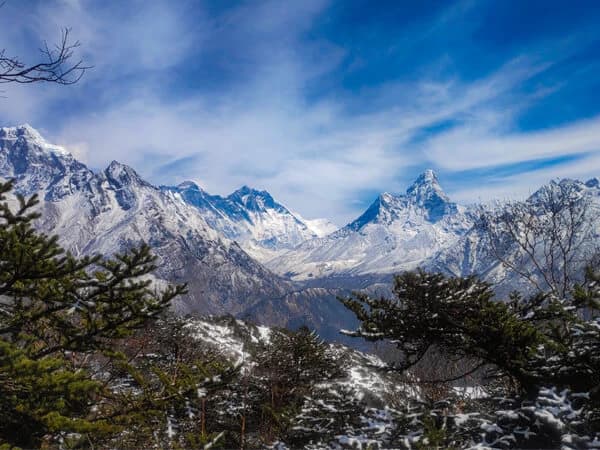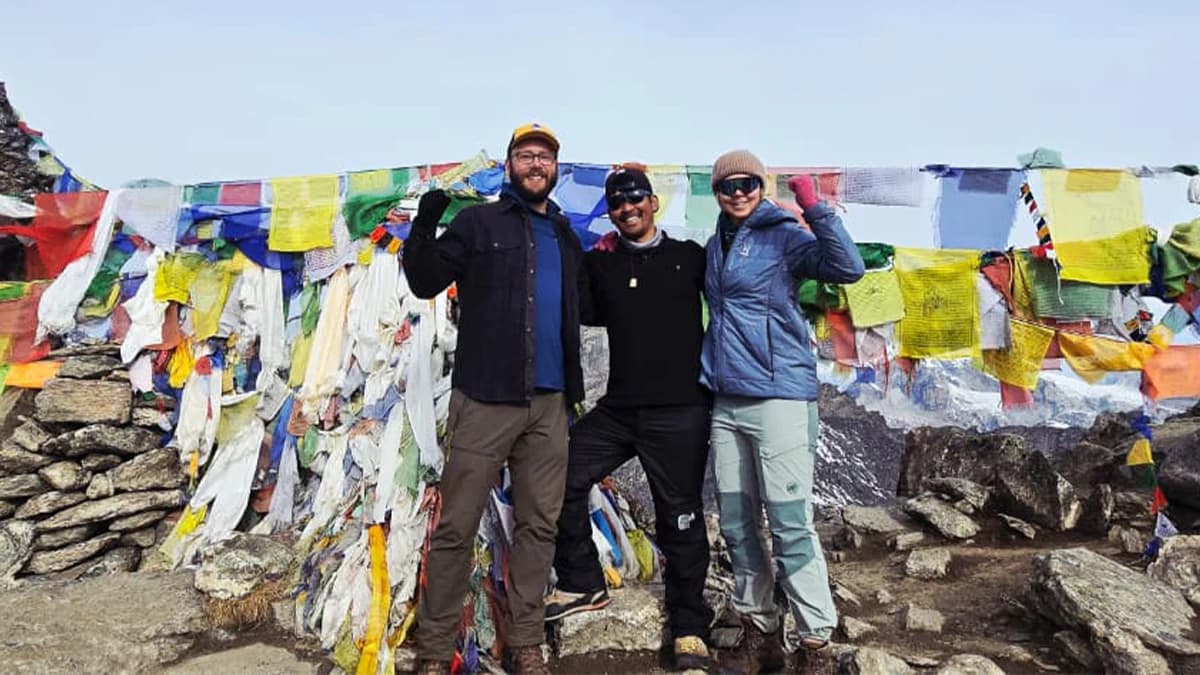
Everest Three Passes Trek

Everest-three-passes-trek
At a Glance
  • Duration19 Days
  • Trip GradeTechnically Challenging
  • CountryNepal
  • Maximum Altitude5535m
  • StartsKathmandu
  • EndsKathmandu
  • Travel StyleTrekking
  • Best TimeMar-Apr-May/Sep-OCt

The Everest Three High Pass Trek in the Everest region is an extraordinary journey, celebrated for its challenging terrain and unparalleled rewards. This trek navigates three prominent passes, all soaring above 5,000 meters: Kongma La (5,535 m), Cho La (5,420 m), and Renjo La (5,360 m). Combining the thrill of high-altitude crossings with iconic destinations like Kala Patthar, Gokyo Lakes, and Everest Base Camp, it offers an immersive experience of the majestic Himalayas.

The route begins in Lukla (2,860 m) and spans 18-21 days, depending on acclimatization and side excursions. Trekkers journey through key stops such as Namche Bazaar, Tengboche, Dingboche, Gorak Shep, and Gokyo Valley. Each high pass provides unique highlights: Kongma La, the highest of the three, offers sweeping views of Makalu, Lhotse, and Ama Dablam; Cho La connects the Khumbu and Gokyo Valleys with dramatic glacial terrain; and Renjo La boasts breathtaking vistas of Everest and the turquoise Gokyo Lakes.

Throughout the trek, hikers encounter remarkable landmarks, including the vibrant Namche Bazaar, the serene Tengboche Monastery, and the shimmering Gokyo Lakes, which are surrounded by snow-capped peaks. The close-up views from Kala Patthar (5,545 m) and the Everest Base Camp area provide unforgettable moments.

Given the trek’s high altitude and rugged trails, it demands physical fitness and proper acclimatization, with rest days in Namche Bazaar and Dingboche. Challenges include steep ascents, rocky paths, glacial crossings, and the risk of altitude sickness. Trekkers must also secure permits such as the Sagarmatha National Park Entry Permit and the Khumbu Pasang Lhamu Rural Municipality Permit.

Highlights

The Three High Passes Trek in the Everest region is one of the most challenging and rewarding trekking routes in Nepal, combining intense adventure with breathtaking scenery. Here are some of the major highlights:

1. Renjo La Pass (5,360 m)

Scenic Panorama: Offers a stunning panoramic view of Everest, Lhotse, Makalu, and Cho Oyu, along with turquoise Gokyo Lakes in the foreground.

Quiet Trails: Renjo La tends to be less crowded, giving trekkers a more serene experience.

Gokyo Lakes and Gokyo Ri: The pass connects trekkers to the Gokyo Valley, where they can trek up to Gokyo Ri (5,357 m) for a splendid sunrise view over Everest and surrounding peaks.

2. Cho La Pass (5,420 m)

Challenging Terrain: Cho La involves crossing glacial paths and steep inclines, making it a demanding yet rewarding adventure.

Close-up Glacier Experience: The route takes trekkers across a glacier, allowing them to experience the raw power of the ice-capped Himalayan landscape.

Entry to Three Passes: After crossing Cho La, trekkers connect to the classic Three Pass trail, reaching the base camp and Kala Patthar for an iconic view of Mount Everest.

3. Kongma La Pass (5,535 m)

Highest of the Three Passes: Kongma La is the highest and most remote pass on the trek, offering solitude and a challenging route.

Views of the Khumbu Glacier: The pass provides an incredible view of the Khumbu Glacier and the mountains surrounding Everest.

Link to Chukhung Valley: After crossing Kongma La, trekkers reach the Chukhung Valley, a wonderful spot for additional acclimatization hikes, including the climb to Chukhung Ri.

Additional Highlights

Three passes and Kala Patthar: Trekkers can experience the iconic Three Passes and sunrise at Kala Patthar (5,545 m) for up-close views of Everest.

Sherpa Culture and Monasteries: The trail passes through several Sherpa villages, with stops at Tengboche Monastery, one of the most important religious sites in the region.

Rich Biodiversity: Along the route, trekkers traverse Sagarmatha National Park, home to unique wildlife like the Himalayan Thar, musk deer, and snow leopards (if you're lucky enough to spot one!).

The Three High Passes Trek is a true adventure, combining high-altitude mountain passes, traditional Sherpa villages, and incredible views of some of the tallest peaks in the world. It's a challenging trek, ideal for experienced trekkers seeking a comprehensive Everest region experience.

What should I expect during the Three High Pass Trek?

The Three High Passes Trek is an adventurous, high-altitude journey that offers awe-inspiring mountain views, cultural immersion, and physical demands. As a client, you should prepare for a physically challenging experience that requires excellent endurance and fitness, as daily hikes can last 5 to 8 hours, with some strenuous ascents and descents, especially on pass-crossing days. Altitude is a significant factor, with three passes towering above 5,000 meters where the air is thin, and it’s straightforward to feel fatigued. Acclimatization is critical to avoid altitude sickness, so expect rest days in certain villages to adjust. The trail varies in difficulty, featuring rocky ascents, glacier crossings, and snow-covered paths at higher elevations.

Along the way, you’ll be rewarded with incredible close-up views of iconic Himalayan peaks like Everest, Lhotse, Nuptse, and Makalu. Highlights also include the Gokyo Lakes, with their vibrant turquoise waters set against a stunning mountain backdrop, and stops at Three Passes and Kala Patthar for panoramic views of the Khumbu Icefall and surrounding peaks. The trek takes you through traditional Sherpa villages such as Namche Bazaar, Tengboche, and Thame, where you can experience Sherpa hospitality, sample local cuisine, and visit the famous Tengboche Monastery. Here, you’ll have the chance to witness Sherpa Buddhist practices, enhancing your cultural experience.

Accommodation along the trek consists of teahouses, which are basic but comfortable lodges offering twin beds, blankets, and shared bathrooms. At higher elevations, the facilities become more limited, with simple amenities and fewer options for hot water. Teahouse menus provide meals like dal bhat (rice and lentils), noodles, pasta, potatoes, and momos, offering a mix of local and Western options that become pricier with altitude. Expect cold temperatures, especially at night and in the mornings, even during peak trekking seasons. Higher altitudes bring potentially freezing conditions, so it’s essential to pack appropriately for warmth and be prepared for sudden weather changes, as clear skies can quickly give way to strong winds or snow.

Health and safety are primary concerns on this trek, as altitude sickness is a common risk. Guides will monitor symptoms like headaches, nausea, and dizziness, and they often carry first aid kits and emergency equipment. While mobile networks are limited, guides typically have access to communication devices in case of emergencies. You’ll need permits for Sagarmatha National Park and Khumbu Pasang Lhamu Rural Municipality, which your trekking company usually arranges in advance.

The trek itself is peaceful and remote, offering a quieter atmosphere compared to the popular Three Pass route, as fewer trekkers undertake this demanding circuit. Trekking in a group provides extra support from guides and porters who help manage your load and enhance the experience. Preparing for the Three High Pass Trek requires quality trekking gear, including high-altitude clothing, a warm sleeping bag, trekking poles, and hydration systems. Equally important are mental preparation and flexibility, as this trek will test both your physical endurance and adaptability.

Is Three High Passes Trekking right for you?

The Three High Passes Trek is an adventurous and challenging trek best suited for experienced trekkers who are physically fit, mentally prepared, and eager for a remote, immersive experience in the Everest region. This trek will take you to altitudes above 5,000 meters as you cross three high mountain passes—Kongma La, Cho La, and Renjo La—offering extraordinary views of Everest, Lhotse, Makalu, and Cho Oyu. If you’re ready to handle a mix of rocky terrain, glacier crossings, and steep ascents and descents, this trek could be a suitable fit.

Since the Three High Passes Trek combines long trekking days (5 to 8 hours) with rigorous altitude gains, a strong level of fitness and prior high-altitude trekking experience are highly recommended. You’ll need to be comfortable with extended hiking days, carrying a daypack, and adapting to simple accommodations in teahouses, where you can expect basic facilities with limited heating, hot water, and shared bathrooms. The trek requires a willingness to embrace cold weather, as temperatures can drop below freezing, especially at night.

Altitude is a constant challenge on this trek. The trek takes you through extremely high elevations, so the risk of altitude sickness is real, and you should be ready to take proper acclimatization breaks. Symptoms like fatigue, headaches, and nausea may arise, and you’ll need to listen to your body and be mindful of health risks associated with high altitudes.

Culturally, the trek offers an immersive experience into the Sherpa way of life, passing through traditional Sherpa villages, sacred monasteries, and the stunning Gokyo Lakes. If you enjoy experiencing local culture along with breathtaking scenery, this trek will be incredibly rewarding.

In summary, if you’re physically fit, mentally prepared for challenging days, comfortable with basic amenities, and eager for an unforgettable high-altitude adventure in one of the most remote and beautiful parts of Nepal, the Three High Passes Trek may be perfect for you. However, if you’re a beginner or haven’t had much experience at high altitudes, it’s advisable to start with a less demanding trek before attempting the Three High Pass.
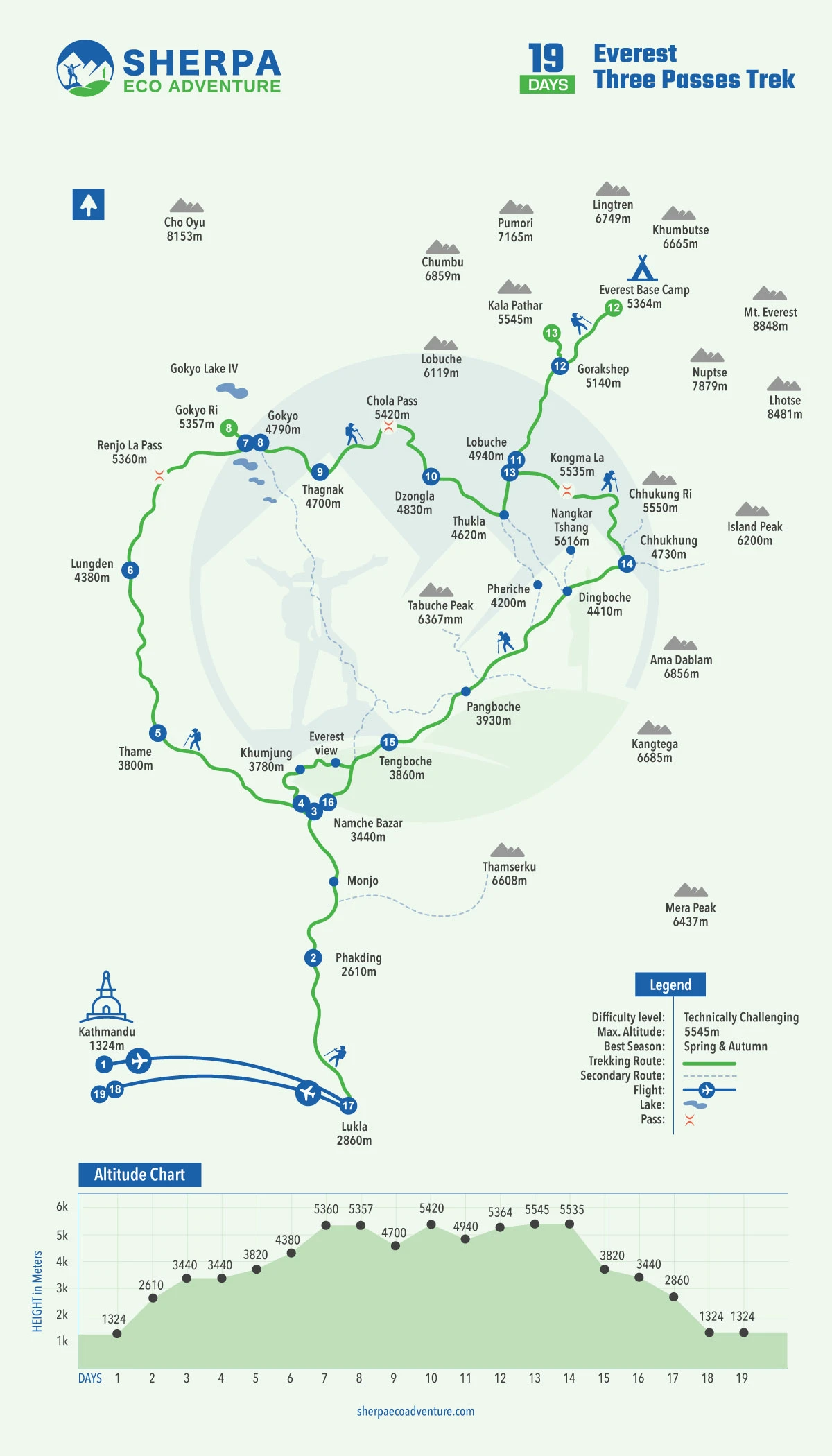
Day to Day Itinerary

Upon arriving in the bustling capital city of Nepal, Kathmandu, take time to settle into your accommodations and adjust to the vibrant atmosphere. Use this day to relax and finalize preparations for your upcoming trek. This includes gathering all the necessary permits and documents for the journey ahead. 

Attend a detailed trekking briefing, where experienced guides will provide essential information about the route, safety protocols, and what to expect during the trek. This is also an excellent opportunity to ask questions and ensure you are fully equipped for the adventure that lies ahead.

Max Altitude:1324 metersAccommodation:Hotel

You’ll start your adventure with a scenic flight from Kathmandu to Lukla (2,860 m), a small mountain airstrip nestled in the heart of the Khumbu region. Upon arrival in Lukla, the trek begins with a relatively easy 3- to 4- hour hike to Phakding (2,610 m), a picturesque village situated along the Dudh Koshi River. The route passes through lush forests, across suspension bridges, and offers early glimpses of the stunning mountain landscapes ahead. This first day allows you to adjust to the rhythm of trekking in the Himalayas while enjoying the beauty of the surrounding nature.

Similarly, you may need to leave Kathmandu around 1 AM for a 6-hour drive to Manthali Airport in Ramechhap in order to catch the early morning flight to Lukla, which takes about 20 minutes. This early departure is necessary because most flights to Lukla operate only in the morning due to weather conditions.

Max Altitude:2610 meters Meal:Breakfast, Lunch & DinnerAccommodation:Tea HouseDistance:8 kilometers | 5 miles ( Trek)Duration:25-30 mins ( Flight) | 3-4 Hours (Trek)

Embark on a 5 to 6 hour trek from Phakding to the vibrant town of Namche Bazaar, situated at 3,440 meters. The trail winds through the lush pine forests of the Dudh Koshi Valley, crossing several thrilling suspension bridges draped with prayer flags over rushing rivers. Along the way, you’ll officially enter Sagarmatha National Park, where the landscape becomes increasingly dramatic, offering glimpses of towering peaks and deep gorges. The gradual ascent toward Namche will challenge your stamina but reward you with beautiful views and the anticipation of reaching the iconic Sherpa town, a central hub for trekkers in the Everest region.

Max Altitude:3440 meters Meal:Breakfast, Lunch & DinnerAccommodation:Tea HouseDistance:10 kilometers | 6.2 milesDuration:5-6 Hours

You'll spend an acclimatization day in Namche Bazaar. Take a hike up to the Everest View Hotel or nearby viewpoints to soak in the stunning mountain scenery. Afterward, explore the vibrant Sherpa town, known for its lively markets, traditional culture, and warm hospitality, while allowing your body to adjust to the higher altitude.

Max Altitude:3440 meters Meal:Breakfast, Lunch & DinnerAccommodation:Tea House

You’ll trek from Namche Bazaar to Thame, situated at an elevation of 3,800 meters. The trek takes around 4-5 hours, following a quieter trail that winds through serene pine forests and traditional Sherpa villages. This scenic path leads to Thame, an ancient Sherpa village known for its historic monastery and rich cultural heritage.

Max Altitude:3800 meters Meal:Breakfast, Lunch & DinnerAccommodation:Tea HouseDistance:8 kilometers | 5 milesDuration:4-5 Hours

The trek takes around 5-6 hours as you gradually ascend toward Lungden. Along the way, you’ll enjoy the stunning alpine views, immersing yourself in the rugged beauty of the landscape. This stretch also allows you to acclimate and prepare for the first high pass ahead.

Max Altitude:4380 meters Meal:Breakfast, Lunch & DinnerAccommodation:Tea HouseDistance:10 kilometers | 6.2 milesDuration:5-6 Hours

The trek duration for this challenging day is approximately 7-8 hours. Starting early, you'll embark on the ascent to cross Renjo La, where you’ll be rewarded with panoramic views of Everest, Lhotse, Makalu, and Cho Oyu. After soaking in these breathtaking vistas, you'll descend toward the stunning Gokyo Lakes, completing a truly memorable journey.

Max Altitude:5360 meters Meal:Breakfast, Lunch & DinnerAccommodation:Tea HouseDistance:12 kilometers | 7.5 milesDuration:7-8 Hours

On Day 8, enjoy a rest day in Gokyo with an acclimatization hike to Gokyo Ri, which stands at 5,357 meters. This hike offers breathtaking panoramic views of Everest and the surrounding peaks. After taking in the stunning scenery, return to Gokyo for an overnight stay.

Max Altitude:5357 meters Meal:Breakfast, Lunch & DinnerAccommodation:Tea HouseDistance:5 kilometers | 3.1 milesDuration:3–4 Hours

The trek from Gokyo to Thagnak, situated at an altitude of approximately 4,700 meters, is a relatively short journey that typically takes about 3 to 4 hours to complete. This segment of the trek is intentionally designed to be less demanding, allowing trekkers to prioritize acclimatization as they ascend gradually in preparation for the challenging Cho La Pass. The trail offers stunning views of the surrounding Himalayan landscape, including towering peaks and glacial moraines, creating a serene yet awe-inspiring atmosphere. The steady pace and moderate duration make this day an essential part of the itinerary, ensuring that trekkers are well-adjusted to the high-altitude environment before tackling the next rigorous stage of the adventure.

Max Altitude:4700 meters Meal:Breakfast, Lunch & DinnerAccommodation:Tea HouseDistance:8 kilometers | 5 milesDuration:3-4 Hours

The trek for the day will take around 7-8 hours, so it's essential to start early to make the most of the daylight. The trail leads up to the glaciated Cho La Pass, a challenging yet rewarding route with stunning views of the surrounding peaks and glaciers. As you ascend, take in the rugged beauty of the high-altitude landscape, but tread carefully on the icy and uneven sections to ensure a safe journey. Once you've crossed the pass, you'll begin a gradual descent, which opens up to the serene valley of Dzongla, where breathtaking vistas await. This beautiful valley offers a peaceful resting spot and an ideal end to an adventurous and memorable day.

Max Altitude:5420 meters Meal:Breakfast, Lunch & DinnerAccommodation:Tea HouseDistance:10 kilometers | 6.2 milesDuration:7-8 Hours

This trek lasts about 3 to 4 hours, offering a shorter journey with a steady, gradual ascent that makes it approachable for trekkers. The path winds through rocky terrain, adding a rugged charm as you make your way towards the final destination of Lobuche. Along the way, the landscape transitions beautifully, with the rocky ground underfoot contrasting against sweeping mountain views and a high-altitude atmosphere that brings a sense of adventure. This segment is an enjoyable and manageable trek, leading you closer to the heart of the mountains with every step.

Max Altitude:4940 meters Meal:Breakfast, Lunch & DinnerAccommodation:Tea HouseDistance:8 kilometers | 5 milesDuration:3-4 Hours

From Lobuche, the trail follows the Khumbu Glacier with gradual ascents over rocky terrain, offering views of Nuptse, Pumori, and glimpses of Everest. After about three hours of trekking, you reach Gorakshep, the last settlement before Base Camp, where you can rest and have lunch. Leaving your main pack behind, the journey continues toward Everest Base Camp along a rugged path filled with glacial moraine. Reaching EBC at 5,364 meters is a rewarding moment, surrounded by colorful prayer flags and the atmosphere of past expeditions. After spending some time exploring and taking in the views, you retrace your steps back to Gorakshep for the night.

Max Altitude:5364 meters Meal:Breakfast, Lunch & DinnerAccommodation:Tea HouseDistance:14 kilometers | 8.7 milesDuration:7-8 Hours

The trek begins early in the morning with a hike up to Kala Patthar, one of the most iconic viewpoints in the Everest region. As the sun rises, you'll witness a breathtaking panorama of Everest, Nuptse, and surrounding peaks, bathed in the first golden light of the day. This unforgettable moment offers a unique perspective of Everest’s towering summit and the rugged beauty of the Himalayan landscape. After soaking in the views and capturing photos, the descent takes you back to Lobuche, with the entire journey lasting around 6 to 7 hours. The day promises an exhilarating experience that combines both the thrill of the ascent and the rewarding views that await.

Max Altitude:5545 meters Meal:Breakfast, Lunch & DinnerAccommodation:Tea HouseDistance:13 kilometers | 8 milesDuration:6-7 Hours

Embark on an exhilarating journey across Kongma La Pass, the highest and most challenging pass of the trek, standing at a towering elevation of 5,535 meters. This segment promises an unforgettable experience as you ascend breathtaking panoramic vistas of the surrounding peaks, glaciers, and alpine landscapes. The pass rewards your efforts with sweeping views of the Khumbu region, showcasing the dramatic beauty of the Himalayas in all their glory.

After soaking in the majestic scenery at the top, begin the descent towards the quaint village of Chhukung, nestled at 4,730 meters. The trail transitions through rugged terrain, serene valleys, and pristine wilderness, offering plenty of opportunities to reflect on the day's adventure. Upon arrival at Chhukung, you can rest and rejuvenate, surrounded by the tranquil ambiance of this charming mountain village.

Max Altitude:5535 meters Meal:Breakfast, Lunch & DinnerAccommodation:Tea HouseDistance:10 kilometers | 6.2 miles

Embark on a scenic journey from the serene village of Chhukung, descending steadily through picturesque alpine meadows. This trek offers captivating vistas of the rugged Himalayas, with each step revealing the raw beauty of the Khumbu region. The trail gradually transitions from high-altitude terrain to lush green pastures, providing a striking contrast that enhances the trekking experience.

Your destination is the enchanting village of Tengboche, a spiritual and cultural hub in the Everest region. Tengboche is renowned for its iconic Tengboche Monastery, a revered Buddhist site that sits majestically against the backdrop of towering peaks. From here, you’ll be rewarded with breathtaking views of Ama Dablam, often described as one of the most beautiful mountains in the world.

This leg of the journey not only offers a feast for the eyes but also an opportunity to immerse yourself in the tranquility and spirituality of this sacred place, making it a memorable highlight of your Himalayan adventure.

Max Altitude:3860 meters Meal:Breakfast, Lunch & DinnerAccommodation:Tea HouseDistance:18 kilometers | 11 milesDuration:7-8 Hours

This segment of the journey takes you on a delightful trek as you make your way back to Namche Bazaar. The trail descends through lush rhododendron forests and meanders past small villages and prayer-flag-adorned monasteries, offering stunning views of the surrounding Himalayan mountains. Along the way, you'll likely encounter friendly locals, trekkers, and perhaps a few yak caravans transporting goods.

As you approach Namche Bazaar, the bustling hub of the Khumbu region, the anticipation builds for your final evening in this vibrant Sherpa town. Known for its lively atmosphere, Namche offers a variety of options to unwind—from cozy bakeries and coffee shops to souvenir stores and cultural exhibits. Take the time to reflect on your incredible adventure amidst the mountains, celebrating your journey in the heart of Sherpa culture.

Max Altitude:3440 meters Meal:Breakfast, Lunch & DinnerAccommodation:Tea HouseDistance:11 kilometers | 6.8 milesDuration:4-5 Hours

Embark on a rewarding journey as you descend from Namche Bazaar to Lukla, the final leg of your adventure in the Everest region. This trek takes you through lush forests, offering captivating views of the surrounding landscapes and the soothing sound of rivers flowing alongside the trail. Along the way, you’ll cross suspension bridges draped with prayer flags, pass by charming Sherpa villages, and perhaps share the trail with fellow trekkers and yak caravans.

Although the descent is long, the ever-changing scenery and serene atmosphere make it an enjoyable experience. Upon reaching Lukla, a sense of accomplishment will fill the air as you reflect on the challenges overcome and the memories created during your journey. Celebrate the successful completion of your trek in Lukla, the gateway to the Everest region, where the camaraderie of trekkers often turns into heartfelt celebrations.

Max Altitude:2860 meters Meal:Breakfast, Lunch & DinnerAccommodation:Hotel

Experience a breathtaking aerial view of the majestic Himalayas on a scenic flight from Lukla to Kathmandu. This journey marks the perfect conclusion to your trekking adventure, allowing you to soak in the awe-inspiring landscapes from above. Upon arrival in Kathmandu, spend the evening unwinding in the vibrant city, reflecting on your incredible experiences amidst the comfort of its warm hospitality and rich cultural ambiance.

Max Altitude:1324 meters Meal:Breakfast, Lunch & Farewell DinnerAccommodation:HotelDuration:25-30 minutes

Consider departing or taking an additional day in Kathmandu to relax and fully immerse yourself in the vibrant city. Use this time to recharge after your adventure or before embarking on your journey. Explore the rich cultural heritage of Kathmandu by visiting iconic landmarks such as Swayambhunath (Monkey Temple), Boudhanath Stupa, or the historic Durbar Squares in Kathmandu, Patan, or Bhaktapur. Stroll through bustling local markets like Thamel or Ason Bazaar, where you can shop for souvenirs, taste traditional Nepali cuisine, or simply soak in the city’s lively atmosphere. This extra day not only offers a chance to rest but also deepens your experience of Nepal’s captivating capital.

Meal:Breakfast
Customize Trip
Trip Service Details
Included
  • Pickup and drop-off services are available for both international and domestic locations.
  • Providing comprehensive meal coverage, including breakfast, lunch, and dinner, on a full-board basis throughout the mountain trek.
  • Sherpa Eco Adventure’s proficient, government-certified, English-speaking trekking Sherpa guides.
  • Remuneration for the guide, encompassing salary, meals, beverages, accommodation, transportation, and insurance.
  • Two nights of accommodation in a three-star hotel in Kathmandu with breakfast included (B/B).
  • All required documents, such as the Everest National Park permit.
  • Accommodation during the trek in the mountains
  • Assistant guide for Group 5 or above
  • Flight expenses cover the Kathmandu to Lukla and Lukla to Kathmandu routes, inclusive of airport departure taxes at both Kathmandu and Lukla airports.
  • A certificate of appreciation was awarded upon the successful completion of the trek.
  • Farewell dinner at a typical Nepali restaurant featuring an authentic Nepali culture show.
  • An oximeter to monitor oxygen and pulse levels is advantageous for all trekkers, helping them stay informed about the risk of high-altitude sickness during mountain treks.
  • a complete first-aid kit that the guide will carry throughout the trek,
  • Complementary to the Sherpa Eco Adventure Duffel Bag.
  • Porter to carry your duffle bag,
  • Sherpa Eco Adventure Trekking quick-dry T-shirt.
  • Your travel insurance will pay for the expenses associated with organizing an emergency rescue operation.
  • All government, Local taxes (VAT), and official expenses
Excluded
  • Nepal entry visa fees (a day tourist visa is available at Kathmandu Airport upon arrival for USD 30).
  • Additional accommodation and meals due to delays may affect the itinerary of this trekking program.
  • A variety of beverages, encompassing both alcoholic and non-alcoholic options, along with hot and cold drinks.
  • Unforeseen expenses beyond our control may arise due to factors such as the landscape, weather conditions, illness, changes in government policies, strikes, physical conditions, and similar variables.
  • Additional fees for excess baggage at domestic airports (the maximum weight allowed is 15–17 kg per person).
  • Individual expenditures, including snacks, laundry, phone usage, Wi-Fi, hot showers, etc., incurred at teahouses during the trek.
  • The travel insurance must include coverage for emergency rescue evacuations from elevations of up to 6,000 meters.
  • Individual trekking gear is required for this expedition.
  • Tipping and expressing gratitude to guides and staff, as per the recommendation of Nepali culture.
  • Additional expenses are not covered in the Price Inclusive section of this trek.
Dates & Availability
Starts:Mar 02, 2026Ends:Mar 20, 2026
PriceUS$2190
AvailabilityGuaranteed
Starts:Mar 04, 2026Ends:Mar 22, 2026
PriceUS$2190
AvailabilityGuaranteed
Starts:Mar 06, 2026Ends:Mar 24, 2026
PriceUS$2190
AvailabilityGuaranteed
Starts:Mar 09, 2026Ends:Mar 27, 2026
PriceUS$2190
AvailabilityGuaranteed
Starts:Mar 12, 2026Ends:Mar 30, 2026
PriceUS$2190
AvailabilityGuaranteed
Starts:Mar 17, 2026Ends:Apr 04, 2026
PriceUS$2190
AvailabilityGuaranteed
Starts:Mar 20, 2026Ends:Apr 07, 2026
PriceUS$2190
AvailabilityGuaranteed
Starts:Mar 23, 2026Ends:Apr 10, 2026
PriceUS$2190
AvailabilityGuaranteed
Starts:Mar 25, 2026Ends:Apr 12, 2026
PriceUS$2190
AvailabilityGuaranteed
Starts:Mar 27, 2026Ends:Apr 14, 2026
PriceUS$2190
AvailabilityGuaranteed
Starts:Mar 30, 2026Ends:Apr 17, 2026
PriceUS$2190
AvailabilityGuaranteed

These dates offer the opportunity for group participation. Should you prefer to arrange a trip on your preferred dates, we can tailor the itinerary accordingly. Feel free to contact us for personalized and specialized dates and travel plans.

Additional Info

Trek Distance: The trek typically spans approximately 130 kilometers (81 miles) over about 17 days. Individual daily distances vary, ranging from 8 to 15 kilometers, with an average daily trek of around 11 kilometers. The journey combines challenging ascents, descents, and breathtaking landscapes in the stunning Himalayas and at the iconic Three Passes.

Physical Fitness: The Everest Three Passes Trek entails prolonged walking on often rugged and rocky terrain. Participants need to possess adequate physical fitness to endure the daily treks, which may span multiple hours. Given the reduced oxygen levels at higher elevations, maintaining cardiovascular health becomes particularly important.

Altitude: The main difficulty trekkers face is the high altitude, which can cause symptoms of altitude sickness like headaches, nausea, fatigue, and breathing difficulties. Overcoming this obstacle necessitates a gradual ascent and adequate hydration, allowing the body to adjust to the diminished oxygen levels in the thin atmosphere.

Challenging Terrain: The trek features challenging terrain, such as rocky trails, river passages, and sharp ascents and descents. Trekkers should ensure they have appropriate footwear and trekking poles to navigate these landscapes safely and effectively.

Remote Location: The Everest region resides in a secluded location with restricted access to medical services. In such scenarios, emergency evacuations present significant challenges. Hence, trekkers need to possess comprehensive travel insurance that encompasses medical evacuation coverage for unforeseen emergencies.

Teahouse Accommodation: Accommodations on the trek primarily comprise basic teahouses, differing in comfort levels compared to standard hotels. Expect limited amenities at these lodgings, requiring trekkers to adjust to a simpler living setting.

Limited Connectivity: The adventure takes place in a remote location with limited access to modern amenities and few communication facilities. Travelers should expect limited connectivity and a sense of detachment from the wider external world.

Weather: The climate is notably unpredictable and rigorous. At greater altitudes, temperatures can sharply decrease with weather conditions swiftly shifting. Trekkers should be prepared for cold temperatures, snow occurrences, and the challenges of the constantly changing weather.

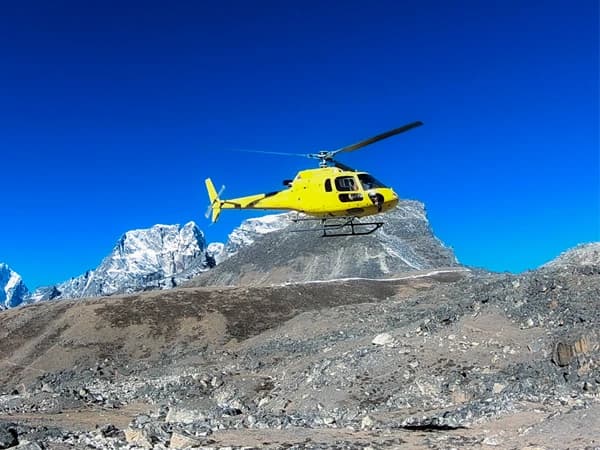
Mountain Rescue Dynamics: The Three passes Trek presents distinctive challenges, notably in the realm of mountain rescue. The trek's remote, high-altitude setting limits prompt access to medical aid. In emergencies, coordinating helicopter rescues becomes intricate due to the area's unpredictable weather patterns and rugged landscapes. Trekking enthusiasts should remain vigilant, emphasizing safety precautions like proper acclimatization and ensuring the availability of vital medical supplies.

The best time to do the Three Pass Trek in Nepal

Spring: From early March to early June, spring emerges as the optimal time for the Three Pass Trek. This season offers favorable weather, pleasant temperatures, and clear skies, complemented by the vibrant bloom of rhododendron flowers, enhancing the scenic beauty of the trekking route.

Autumn: From late September to early November, autumn offers optimal conditions for the Three Passes Trek in the Everest region. With stable weather, clear skies, and cool temperatures, trekkers can enjoy comfortable and scenic trails amidst the Himalayan peaks.

Accommodations and Meals 

Rooms and Bathrooms: Accommodation in the Everest region varies by altitude. At lower elevations, tea houses and lodges offer shared facilities, such as twin beds or dormitories, with additional charges for amenities like hot showers and squat toilets. As you ascend to higher altitudes, expect more rudimentary accommodations with fewer conveniences.

Places like Gorakshep, Dzongla, and Lobuche typically feature basic facilities, including shared squat toilets and limited washing options. Conversely, lower regions like Namche Bazaar provide more upscale lodging options, including private rooms and en-suite bathrooms. Being mentally prepared for simpler amenities at higher altitudes is essential, and packing essentials like a sleeping bag is advisable.

Hot Shower: In higher, remote teahouses, hot water availability can vary due to challenging mountain conditions. While many teahouses use solar panels or local heating, some might offer bucket showers upon request due to colder temperatures and simpler facilities.

Charging: Charging differs among teahouses or lodges. More established spots like Namche Bazaar typically offer more reliable charging options, often powered by solar panels or generators, though occasional outages may occur. It's wise to carry portable power banks and conserve device batteries whenever possible.

Wi-Fi: As you ascend, Wi-Fi availability diminishes in the Everest region, with higher altitudes focusing on essential amenities over connectivity. Trekkers should anticipate intermittent or no Wi-Fi, embracing the chance to disconnect and immerse themselves in the pristine natural environment.

Breakfast: In places like Namche Bazaar, breakfast includes various options like eggs, toast, porridge, muesli, and hot drinks. Yet, at higher elevations, food choices may decrease, with teahouses offering simpler but nourishing meals to aid trekkers.

Lunch and dinner: Teahouses are vital meal hubs, providing a mix of local and global dishes. Lunches offer energizing choices like soups and sandwiches, while dinners include heartier options such as dal bhat and noodles. Catering to varied diets, teahouses offer vegetarian selections. Despite challenges like high altitude and limited resources, meals are thoughtfully crafted to satisfy trekkers and aid acclimatization.

Additional Information

Travel Insurance: Travel insurance is vital due to the unpredictable terrain and harsh conditions. This coverage offers financial security during medical emergencies and evacuations, mitigating high costs and providing peace of mind. Given the remote setting and sparse medical facilities, travel insurance serves as a crucial safety measure for trekkers.

Passport and Visa: Ensure your passport is valid for at least six months upon entering Nepal. You can obtain a tourist visa either upon arrival at Kathmandu's Tribhuwan International Airport or from a Nepalese embassy or consulate in your home country. Always check Nepal's current visa requirements before proceeding.

Money Exchange: The official currency in Nepal is the Nepalese Rupee (NPR). In Thamel, you'll find banks and exchange centers offering competitive rates. ATMs in Thamel accept international cards, note that the Everest region lacks ATMs. Ensure you withdraw the necessary funds in Kathmandu before starting your trek.

Tips: Tipping guides, porters, and lodge staff is a customary gesture to acknowledge their dedication. While there's no predetermined amount, we recommend tipping based on the quality of service you've received.

Luggage: Minimize the weight of your luggage and consider storing extra suitcases in the hotel's locker room during your trek. Ensure that your duffel bag does not exceed a weight limit of 10 kg and your backpack does not exceed a weight limit of 5 kg.

Personal Expenses: While our trekking package encompasses transportation, accommodation, meals, and necessary permits, along with guide and porter fees as per the itinerary, it's essential to budget for personal expenses. This might encompass tips, travel insurance, international flight costs, shopping, additional snacks and beverages, and other miscellaneous items.

FAQs

Essential items include:

  • Layered clothing for varying temperatures.
  • Warm down jacket.
  • Trekking boots.
  • Sleeping bag (rated for -15°C or lower).
  • Crampons (for icy passes).

Yes, the trek can be combined with side trips to Gokyo Lakes, Ama Dablam Base Camp, or Island Peak climbing.

You might spot musk deer, Himalayan thar, snow leopards (rare), pheasants, and yaks.

ATMs are available only in Namche Bazaar, but they are unreliable. Carry enough cash.

Yes, tipping is customary. Budget around 10–15% of the trek cost for guides and porters.

Costs vary based on guides, permits, food, and accommodations, averaging $1,500–$2,500 USD, including gear rentals if needed.

Yes, insurance covering high-altitude trekking and evacuation is mandatory.

Temperatures can drop to -15°C to -20°C at night during high-altitude stays, especially in winter.

Helicopter rescue is available but requires travel insurance that covers high-altitude trekking and evacuation.

Wi-Fi is available in teahouses but can be expensive and slow. Mobile networks like NCELL and NTC work in some areas.

The trek involves extreme altitudes, and symptoms like headaches, nausea, or dizziness can occur. Proper acclimatization and hydration are vital.

A high level of fitness is required, with the ability to trek 6–8 hours daily on steep and rough terrain.The trek involves extreme altitudes, and symptoms like headaches, nausea, or dizziness can occur. Proper acclimatization and hydration are vital.

Yes, it’s possible to trek solo, but it’s safer and more enjoyable with a guide or group.

The Three Passes Trek is a challenging circuit trek in the Everest Region, crossing three high-altitude mountain passes: Kongma La (5,535 m), Cho La (5,420 m), and Renjo La (5,340 m).

The highest point is Kongma La Pass (5,535 m).

Teahouses offer a variety of meals, including dal bhat, noodles, pasta, momos, pancakes, and soups.

Yes, teahouses are available in most villages, providing basic accommodations and meals.

While solo trekking is allowed, hiring a certified guide is recommended for safety, navigation, and cultural insights.

You need:

  • Sagarmatha National Park Entry Permit.
  • Local Khumbu Pasang Lhamu Rural Municipality Permit.

Crossing the three high passes.

  • Visiting Everest Base Camp (5,364 m).
  • Hiking to Kala Patthar (5,545 m) for Everest views.
  • Stunning vistas of peaks like Everest, Lhotse, Ama Dablam, and Cho Oyu.

Yes, proper acclimatization days are essential to avoid altitude sickness.

While not mandatory, prior experience with high-altitude trekking is highly recommended.

The trek is considered very challenging due to high altitudes, long days, and rugged trails. It requires excellent fitness and stamina.

The ideal seasons are spring (March-May) and autumn (September-November) for clear skies and stable weather.

The trek typically takes 18 to 21 days, depending on the itinerary and acclimatization days.

Price Per personUS$2190(Price varies by group size)
Group Discount Price
Number of traveler Price per person
  • 1 paxUS$2990
  • 2 - 5 paxUS$2390
  • 6 - 10 paxUS$2190
Book This TripCustomize Trip
Similar Trips
Pikey peak trek

Pikey Peak Trek

Everest Panorama Trek

Everest Panorama Trek

Top Rated
Everest Base Camp Trek

Everest Base Camp Trek

View all packages